
Seesaw 21 Miles Across
Twenty-one miles of water now carry the weight of a four-decade standoff. What happens around the Strait of Hormuz next depends less on who wins than on how the US and Iran end the hostilities.
By Louis du Pont
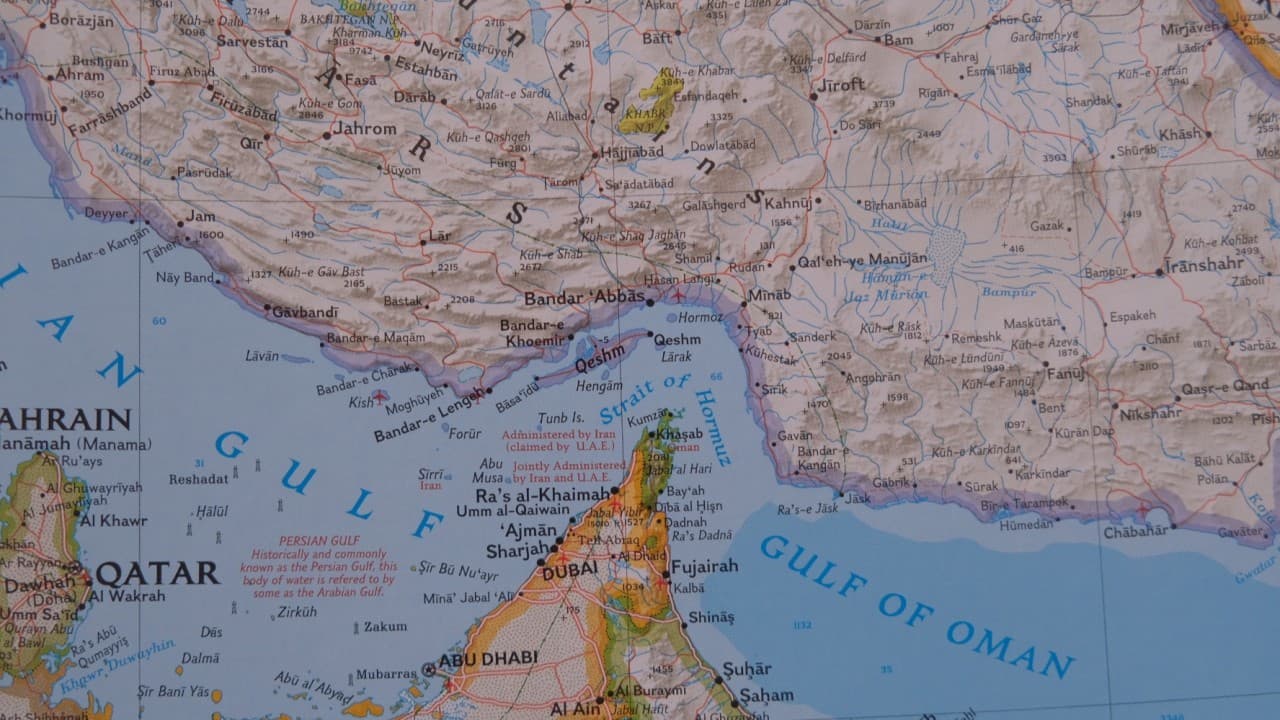
I'm sure that many of you are all wondering the same thing, what is the situation around the Strait of Hormuz going to look like moving forward? While no one can be certain about the long-term, it is clear to say that for the immediate to near-term there is an oscillation along this speck of water on the Earth that will only intensify. On one side you've got the globalists who above everything want a return to the status quo of no friction moving in and out of the Persian Gulf, and on the other you've got a nation that has endured a long hindrance of economic prosperity imposed by the western nations. The conflict that we can almost call a war now is a show of defiance from both sides of tensions, and it is blatantly obvious that neither side is willing to offer the other side what they truly want. The next steps of the conflict will be the catalyst for how long we will have to wait for a resolution between the two main competing forces, but first we need to understand how each side has arrived to this situation.
USA: In the 80s following the Iranian revolution, the international community led by the US rejected the new Iranian government from becoming another member of the global community, and the US has carried this stance forward up until today. In consequence, effectively the US heavily punished all economic activities dealt with Iran through guidelines Congress created which "has played a key role in shaping U.S. policy toward Iran, authorizing extensive U.S. sanctions, providing aid and authorizing arms sales for partners threatened by Iran" (Thomas, 2025, p. 1). The US has since sustained a posture towards Iran that if the government isn’t willing to heed US demands then the US will maintain its exclusion from the global economy.
IRAN: Since the downfall of the Shah and the creation of the Islamic Republic of Iran, it has poised itself as the "opposition to the United States and its regional influence has been a defining feature of the Islamic Republic's identity and ideology since its establishment" (Thomas, 2025, p. 1). Iran resists and pushes back against the US in various ways, such as through the funding and militarization of extremist groups like Hezbollah and Hamas, which are part of the Axis of Resistance. Furthermore, the current conflict, the death of its supreme leader Ali Khamenei, and the succession of his son Mojtaba Khamenei have now entrenched this notion of undermining US authority. Throughout the continued fighting it has become evident that the opposition to American influence will remain a point of focus, especially among the hardliners within the Iranian political sphere.
Now with both sides staging hostilities towards each other, the big question is how long the US will be able to maintain its global hegemony. A few things tie to US dominance in the world, but I'd like to highlight the US Military and the US Dollar, and how not only Iran, but the next largest economy in the world, China, is challenging them. While both assets aren't exclusively the reasons for American global domination, they certainly make a sizable portion, and at this moment China and Iran are testing both against an alternative system the US doesn’t control.
US Military: The largest military budget in the world supported by the largest economy in the world helps the US keep the single largest military in history. Having said that, slowed down by a bureaucratic system, the Iranian conflict has provided an opportunity for the Chinese military to size itself against a limited American military capacity. Between leadership style and strategy, or the technology and capabilities showcased, Chinese reconnaissance is taking the time to learn how to counterbalance the US in any future conflict that reaches a point of military escalation. Foremost, the asymmetric nature of this conflict shown using drone technology exemplifies how the US isn’t 100% primed for warfare with a foe that has evolved away from traditional arms.
US Dollar: Behind the scenes, the US Dollar runs the world economy and is by far the single most used currency for trade. However, US sanctions have shut Iran out of the US Dollar system, so they are striving toward an alternative system. China couldn’t agree more and is in the process with Iran is taking that chance right now through Chinese yuan. If there is any success “in institutionalizing yuan-based oil trade, the implications could extend well beyond sanctions evasion... ...Should other producers, particularly in the Gulf, experiment with non-dollar settlements, even on a limited scale, the symbolic and structural impact could be significant" (Khan, 2026).
Now that the MOU seems to be standing, the fighting couldn’t have come at a more pivotal moment, with US power in question and the loss of control over the strait. On both sides there is a neglect of the MOU which has resulted in continued fighting and showcases the lack of hesitation of using militaristic means to influence the status quo of how the strait will continue to be used. Depending on an outcome, the world can face a very different reality from the present. The resulting world won’t hinge only on one side winning or losing, but on how the two sides end the hostilities. Until either side is willing to yield the leverage it has spent decades building, Washington’s insistence on economic exclusion until compliance, Tehran’s newfound willingness to weaponize the Strait itself, the oscillation described at the outset will only sharpen before it settles, making continued fighting the far likelier near-term outcome.
What do you think will come next?
Sources
- 1.Thomas, C. (2025, May 22). Iran: Background and U.S. policy (CRS Report No. R47321). Congressional Research Service. https://www.congress.gov/crs-product/R47321
- 2.Khan, K. H. (2026, March 30). Is the US dollar really winning the Iran war? Asia Times. https://asiatimes.com/2026/03/is-the-us-dollar-really-winning-the-iran-war/