Gloap
A trip planner for travellers who like the map more than the itinerary.
Visit gloap.app →Most travel apps optimise for booking. Few help you think, to wander a globe, sketch a route, and let the trip take shape before any reservation is made.
- 01
Built a SwiftUI Canvas globe so users can spin and pin destinations directly.
- 02
Wired Claude to generate itineraries from sparse inputs and explain its reasoning.
- 03
Pushed the onboarding to under 30 seconds before a first useful suggestion.
An iOS app that feels closer to a sketchbook than a spreadsheet, playful upfront, precise once the plan is set.
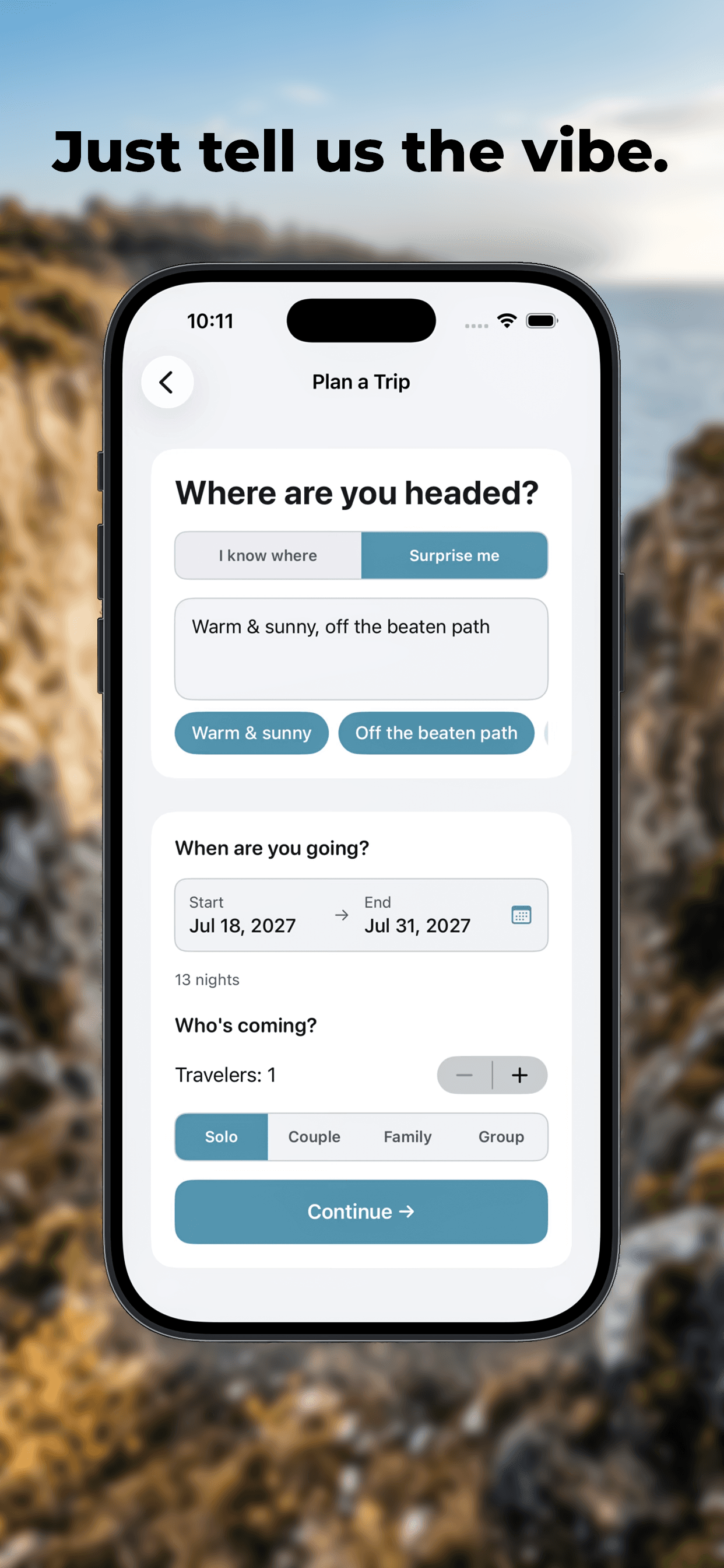
Vibe-first onboarding
Most travel apps open with a destination field, a question most users cannot answer cold. Gloap opens with a feeling, and pre-set chips like 'warm and sunny' or 'off the beaten path' translate sparse intent into a prompt the model can act on. The goal is a useful suggestion inside thirty seconds, not a perfect itinerary on the first tap.
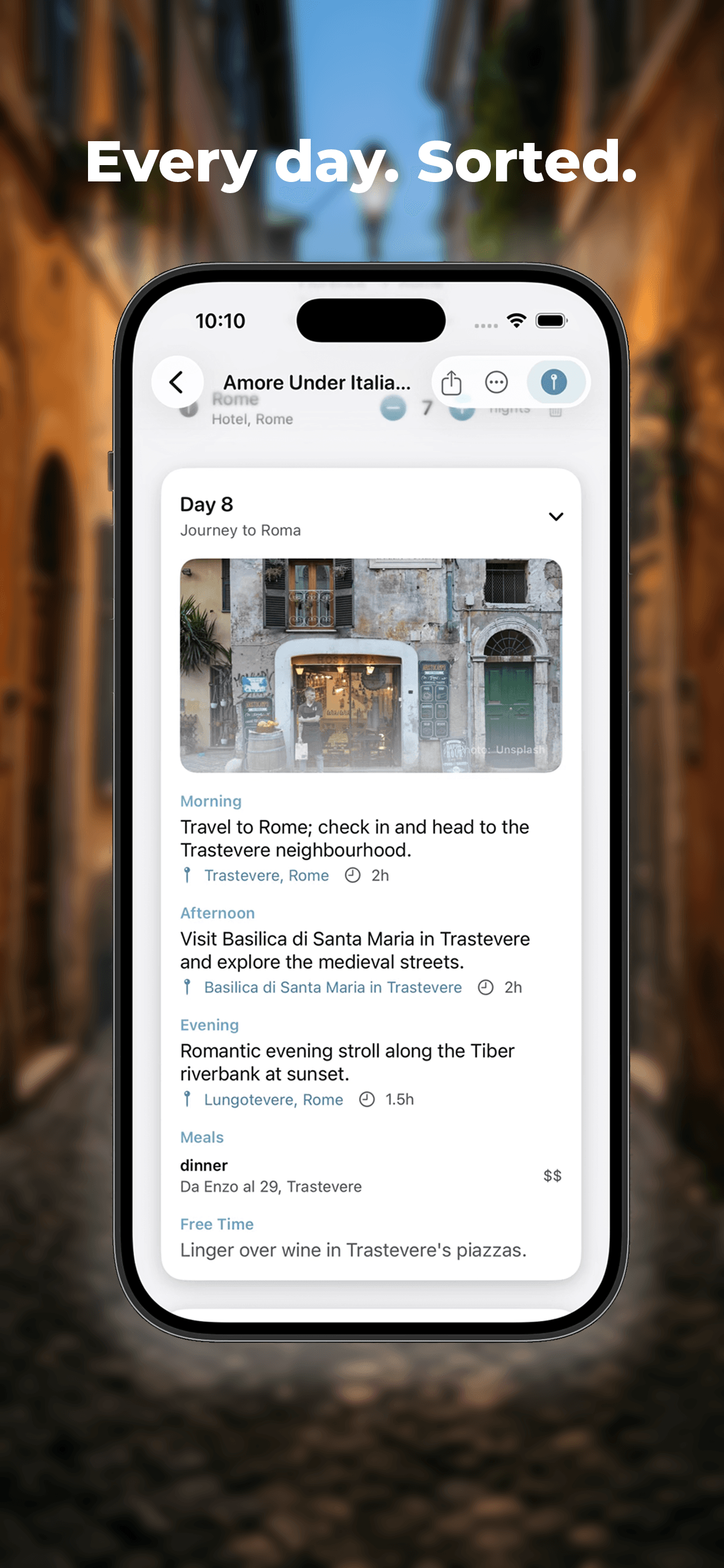
The day as the unit of planning
Itineraries built around hard timestamps break the moment a flight is delayed. Gloap structures each day around morning, afternoon, and evening so a late start does not cascade into anxiety. Cards are deliberately screenshot-friendly, because that is how plans actually get shared with whoever is coming along.
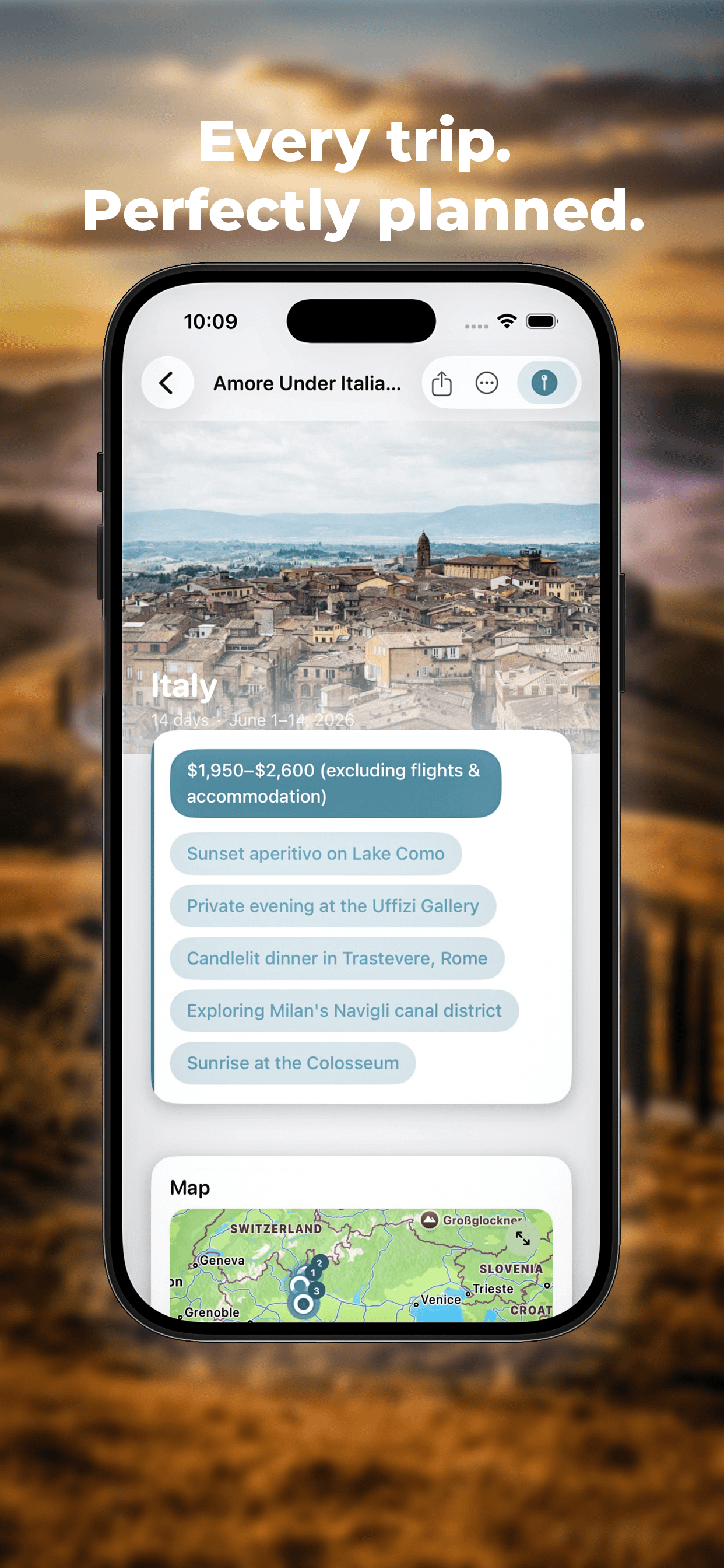
The trip as a spread
The cover view is the artefact people show off, and the artefact partners and accountants review against. Budget sits at the top because it is the first question anyone else will ask, and highlights collapse into chips so the page rewards skimming, which is how travel content actually gets read.
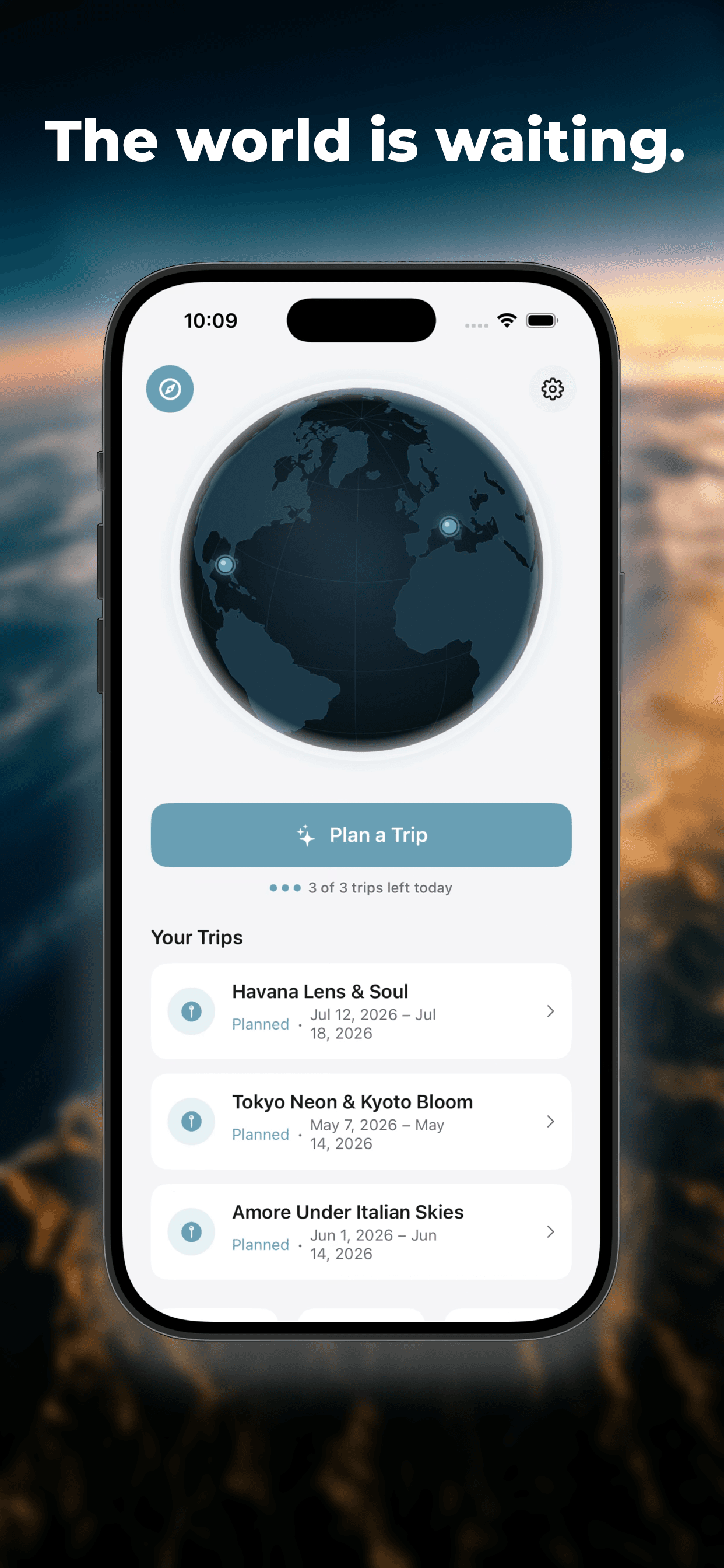
Spin to begin
The 3D globe makes wandering the entry gesture, so spinning, panning, and pinning a country feels like daydreaming rather than data entry. Surfacing '3 of 3 trips left today' frames the per-day generation budget as abundance rather than restriction, while the trip list keeps the home from looking empty on first launch.
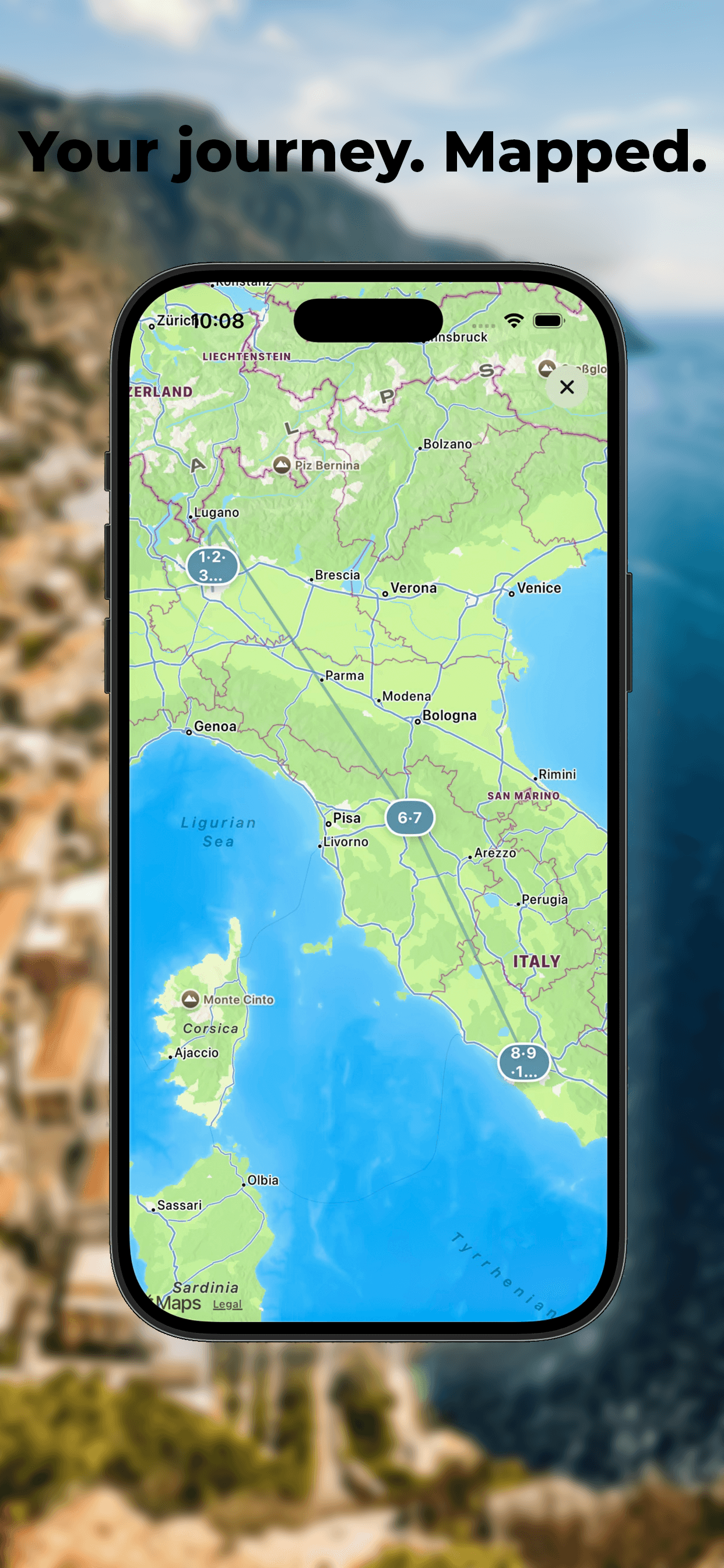
The route as a story
Native Apple Maps means no tile fees and full offline support, which keeps the unit economics quiet on a planner that already pays per generation. Stops cluster by day rather than by location, so the trip reads as motion across a country instead of a scatter of pins.